Haha silly, phones can’t eat.

Hi Julia,

Should I start a food Instagram account? I think it would help me eat healthier and I take a lot of pictures of my food anyway! I’m worried it’s going to make me go crazy and think about what I’m eating all the time, but I already see so many other food accounts on my feed. I just want to make sure it’s not going to be a bad thing.

- ThePhoneEatsFirst62
Hello ThePhoneEatsFirst62,
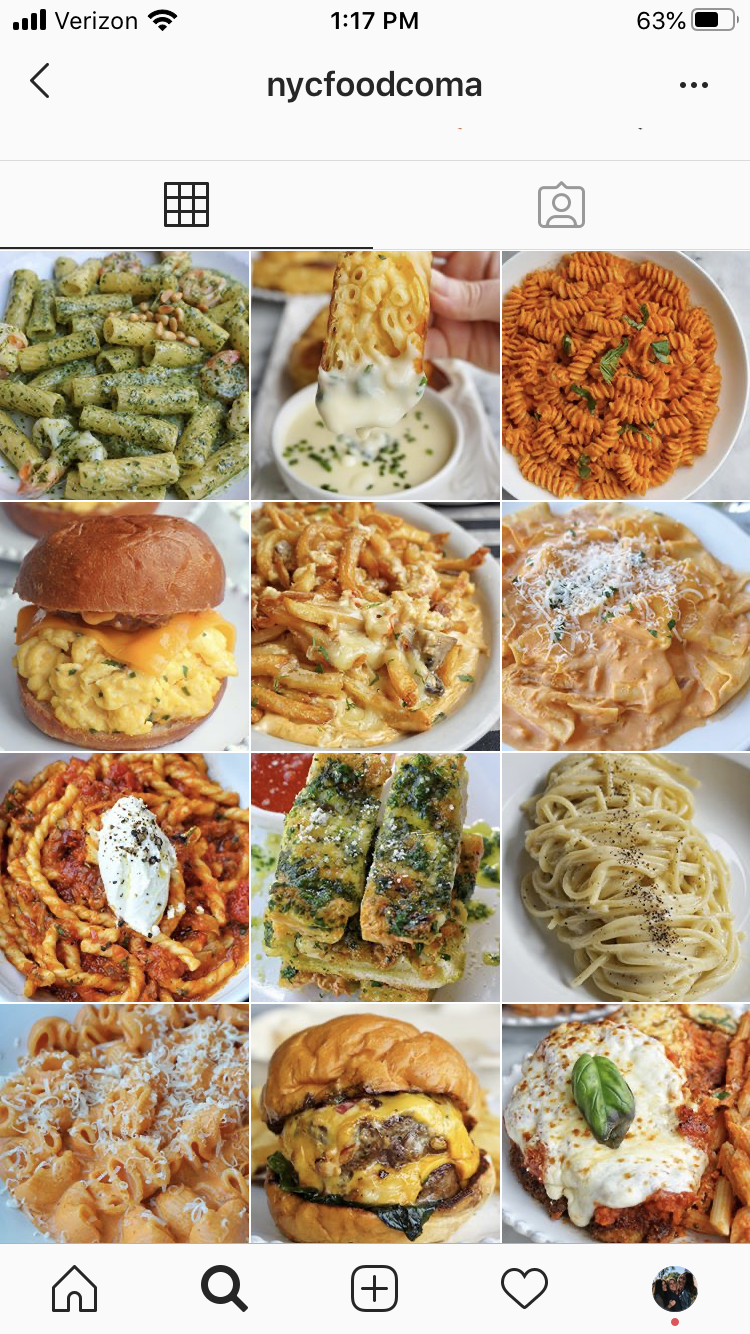
I don’t have a food Instagram account myself, but I follow a bunch of them and have some friends who have their own. I’ll admit, I did go to a diner once for the sole reason that it had a very active social media account advertising huge, extravagant milkshakes. And I’m definitely not alone: 75% of avid diners in the U.S. said they’ve chosen a place to eat based only on pictures on social media in 2016. But, when me and my friends ordered, we ended up getting very regular milkshakes just 30 minutes further from where we would usually get them (the actual menu, unlike Instagram, did not show pictures of the food). And even after that traumatic experience, pictures of food still make up the majority of my social media feeds.
Why is this trend so popular, and how is it affecting what or how we eat?
“Food is a monster of an opportunity trend,” says Alexa Tonner, co-founder of Collectively, a social media influencer marketing agency. “People want to get their followers excited, and what’s more exciting than something that’s so visual?” Besides just a visual component, there may be a hormonal one too. A study found higher levels of ghrelin (a signal for food intake) in people who had just looked at images of food, compared to those who had seen neutral pictures, supporting the fact that there’s nothing that will make me hit the like button faster than a slow-motion video of a warm chocolate chip cookie splitting open.
But, there is some debate as to if those feelings of hunger from seeing pictures of food translate to wanting to eat that food in real life. One study found that viewing pictures of food and then consuming a similar one decreased enjoyment of eating. Subjects who viewed pictures of salty snacks and then ate salted peanuts tended to enjoy the food less than people who had looked at photos of desserts. So, even if the milkshakes had looked like they did on Instagram, would I have still enjoyed it less than if I hadn’t seen it online? Maybe not, if I had taken a picture of it myself. An experiment published in the Journal of Consumer Marketing discovered that people who were made to take a picture of red velvet cake reported it as tastier than those who did not take a picture of the same cake (this was not seen with healthy foods, but keep that in mind for later).
Why would the act of taking a picture of our food make it taste better? Taking photos of any experience makes it more enjoyable, one study concluded, as long as the photography doesn’t interfere with the experience (as someone who takes videos at concerts and then never watches them after, I felt that). More specific to food, taking pictures of your food before you eat can be seen as a kind of a ritual, and people who completed brief rituals before eating enjoyed their food more than those who ate right away.
If taking pictures of our food makes us enjoy eating more, should we all have our own food accounts?
I think it’s probably okay to have one if you do it in a healthy and mindful way. A lot of food accounts are following the “intuitive eating” trend, which encourages people to listen to their bodies and stop eating when they’re full. “I like this approach since it moves away from the ‘all or nothing’ mentality that so many diets promote,” says Amanda Baker Lemein, R.D., a registered dietitian. And there is evidence that these food accounts can influence us to eat healthier. The same Journal of Consumer Marketing study mentioned earlier had subjects either read an article about how Americans were eating less or about how they were eating more, and then gave them the opportunity to take a picture of healthy food before they ate it. The people who read the article about healthier Americans thought the healthy food was tastier than those who read the other article that implied that more Americans ate unhealthier food.
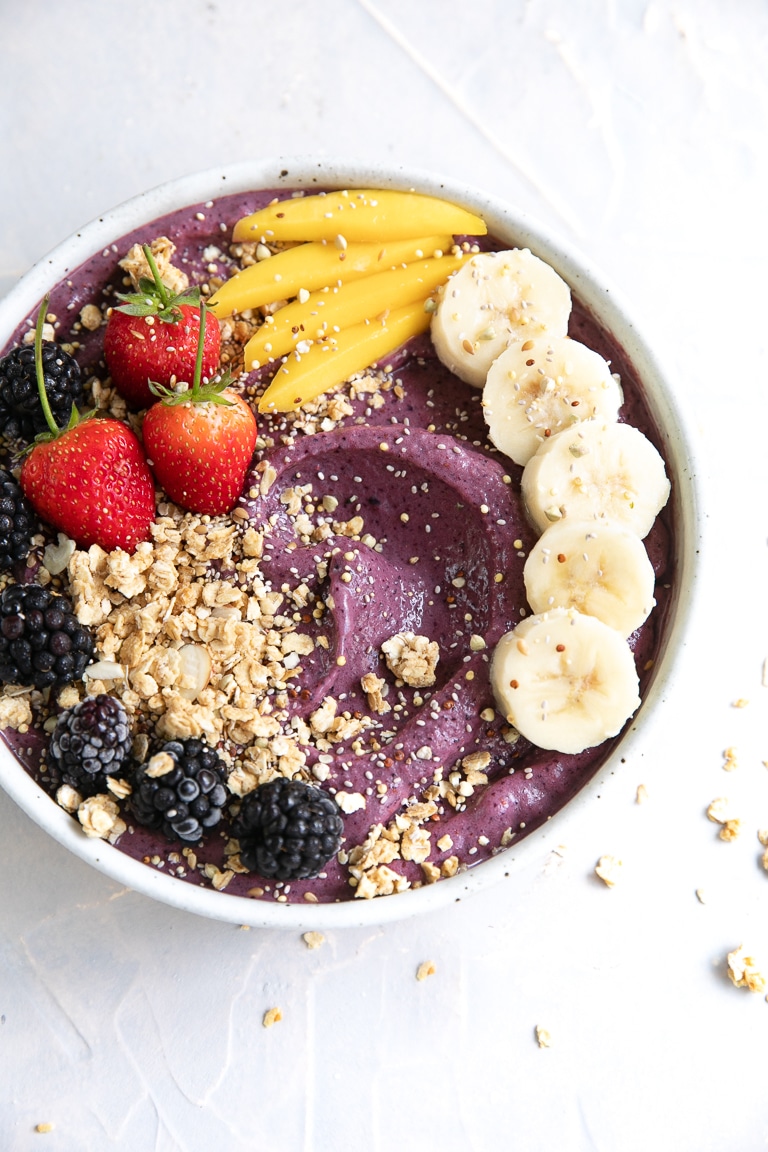
So, seeing posts of artfully designed smoothie bowls and dessert alternatives that-look-like-the-real-thing may make us like those foods more than if we just came across them in a restaurant (I saw a post last week for chickpea blondies on Instagram and was really excited to make them until my family shot it down so fast). What’s fascinating about this study is that the desire to follow what other people were eating overrode the affinity for unhealthy foods we have after taking a picture of them (as we saw in the red velvet cake example).
This is why following lots of Instagram food accounts can go wrong. Lauren Slayton, R.D., a dietitian and cofounder of Foodtrainers, starts to find an issue with food influencers “when someone alludes to or poses with a whole pizza or fries, giving the impression that they can eat volumes of crappy food and still look and feel great.” A lot of people who run food accounts post pictures of themselves as well, and I’ve always found myself wondering how these people can travel around New York eating dessert and pasta every day and seem not to gain any weight. We need to keep in mind that Instagram isn’t reality. Eric Mersmann, an ice cream Instagrammer in New York, said that at the ice cream events he goes to (what are those and how can I go?), about 75% of the ice cream gets thrown out “once it gets too melty for a good shot.”
There also also accounts on the other side of the spectrum that might show foods that the account owners think are healthy, but might not actually be. Acaí bowls, for example, are all over Instagram, and although they’re healthy in theory, “these bowls are usually two to three servings, covered in toppings like granola and chocolate shavings, and have WAY too much sugar to be considered a balanced meal, says Gillean Barkyoumb, R.D., founder of Millennial Nutrition.
So, there’s definitely a lot to keep in mind if you’re planning on starting a food-focused Instagram account, or even if you just follow a bunch of them. The main takeaways I’ve found are these: 1) Don’t listen to the people who roast you for taking pictures of your food, because studies show you’re probably enjoying your food more than them. 2) People aren’t necessarily eating the things they post on Instagram, or they have a pretty crazy workout regimen to keep up with it all, so it’s probably not the best idea to try to emulate that lifestyle yourself. 3) Things that people tell you are healthy online might not actually be. 4) If you’re set on starting an account yourself, try to keep it real. If you’re trying to tell people to eat a certain thing, show them why it’s good for them.
And don’t just post pictures of the salads you’re eating for lunch if you have pizza for dinner. It’ll help all of us to see the good and the bad (which categories you think pizza and salad fall into is your choice).
Always yours,
Julia
 Advice from a Gen Z Who's Just Trying Her Best